Concrete contractor in Aurora, CO - driveways and patios built on a solid base
Form & Finish Aurora Concrete is a concrete contractor based in Aurora, CO. We pour driveways, patios, garage floors, footings and foundations here and in the cities around it, starting with the base nobody sees.

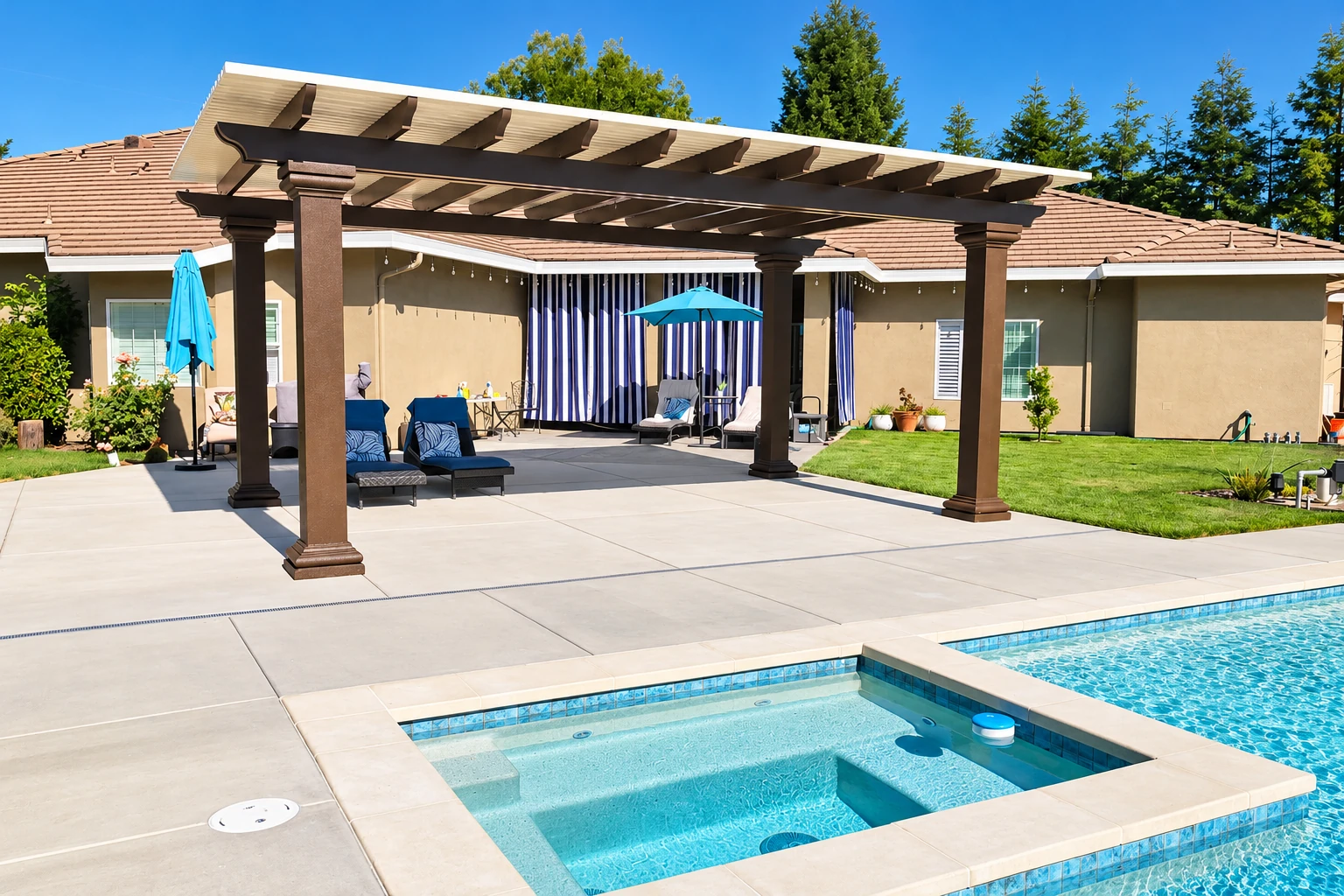
What we pour in Aurora and what drives the cost
We're based in Aurora, and most of what we pour here is flatwork, the flat concrete of driveways, patios, sidewalks and garage floors. We also set footings and foundations for homeowners and builders, and we work across the cities around Aurora, including Centennial, Parker and Commerce City.
The price comes down to the slab's size and thickness, how much old concrete has to come out, how much digging and packing the base needs, and the finish you pick. The schedule turns on weather and on curing, the wait while the slab hardens before you can walk or drive on it. Your written estimate spells out what's included and what isn't.
Permits here come from the City of Aurora, which issues building permits after every department has reviewed and approved the plans. I check with the city for your address, and when your job needs a permit, we get it before work starts, so the review is on the schedule from the beginning.
Concrete work we do in Aurora
Every project we take on in Aurora starts with one of these services. Follow a link to see how we handle that job from the base up.
Concrete driveway building
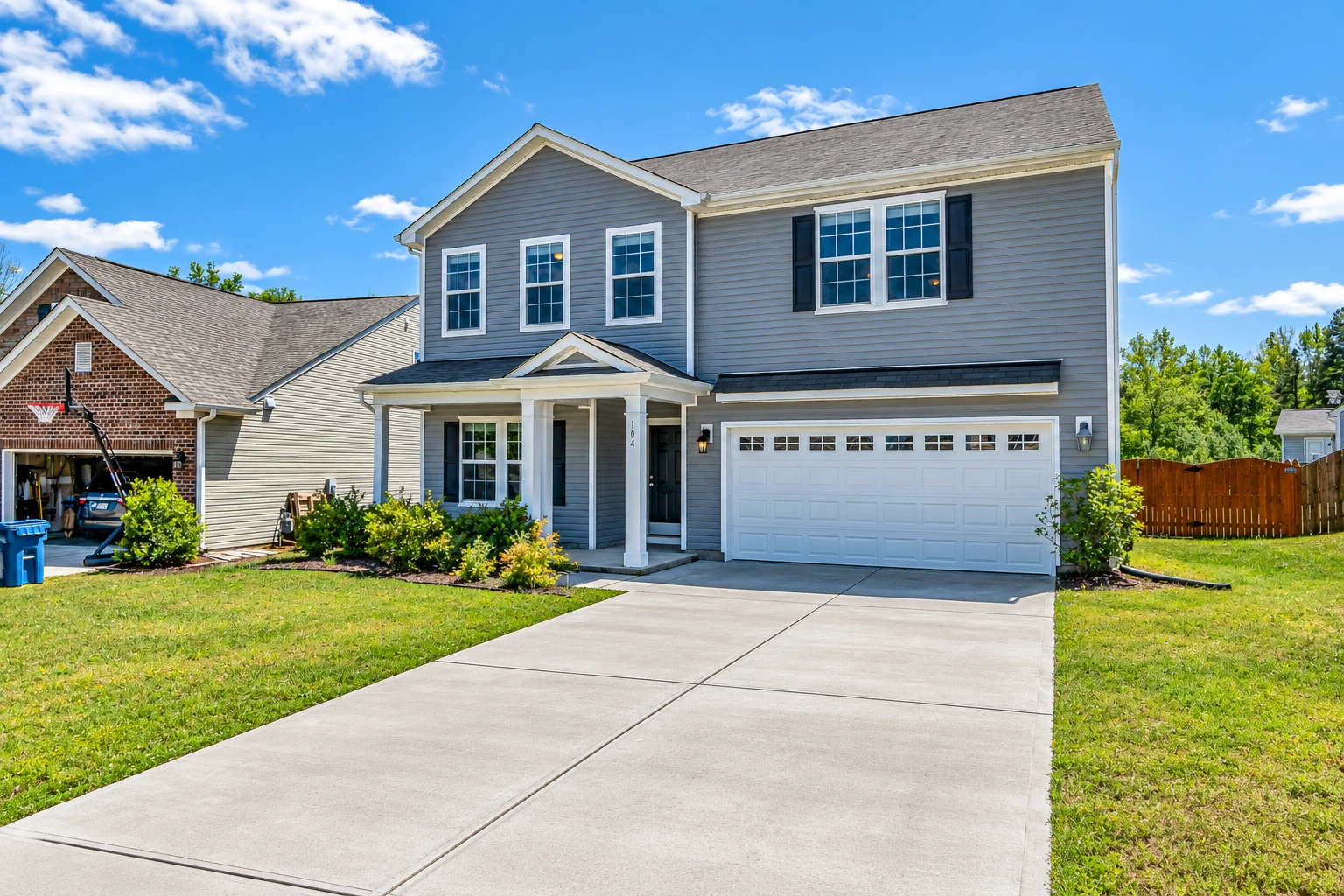
When a driveway has sunk, split or sends water toward the garage, we tear it out, rebuild the base and pour a new slab sized for cars.
Learn more about Concrete driveway buildingConcrete patio construction
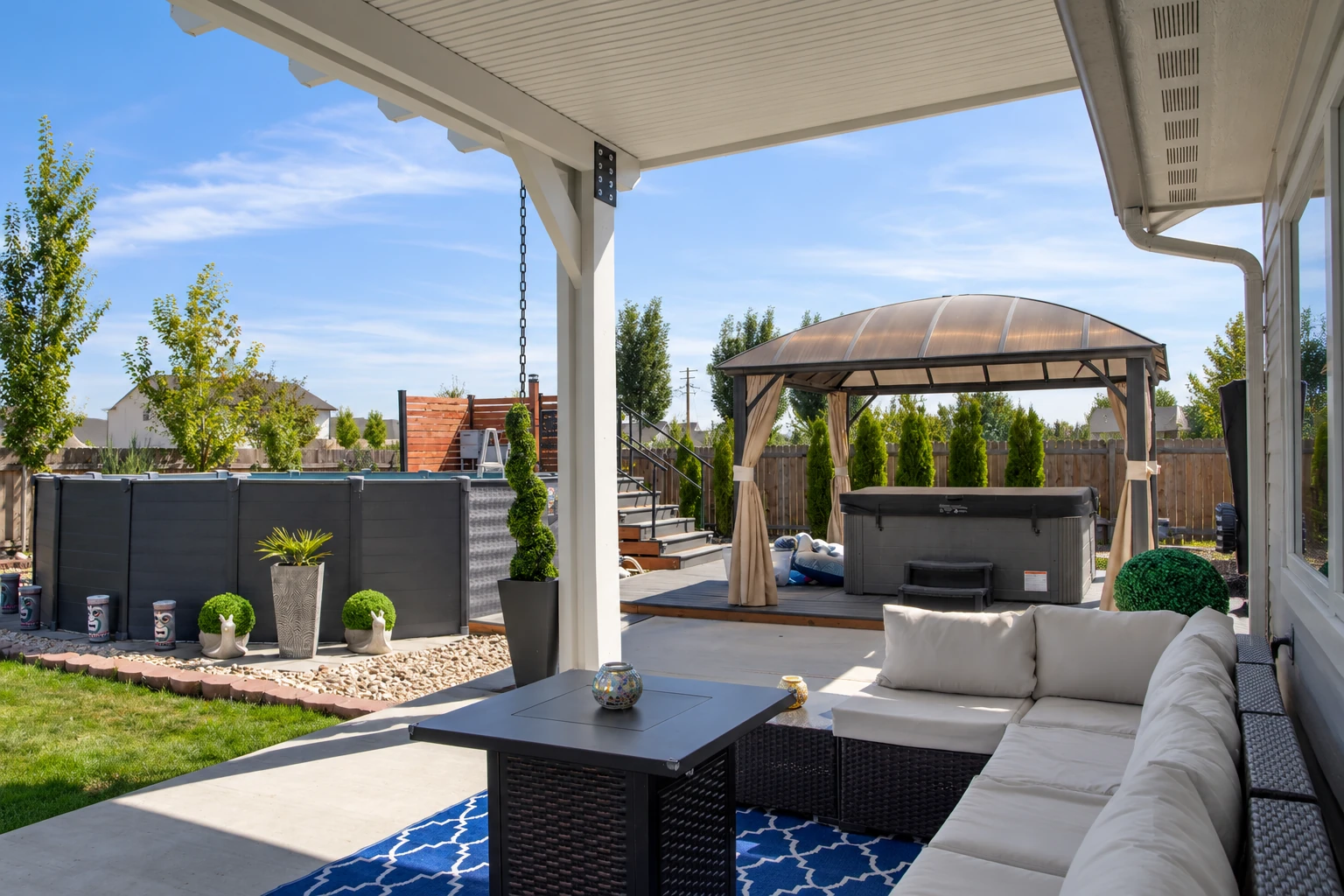
A new patio off the back door, or a replacement for one that's settled and cracked. We slope it away from the house so rain runs off.
Learn more about Concrete patio constructionStamped concrete services
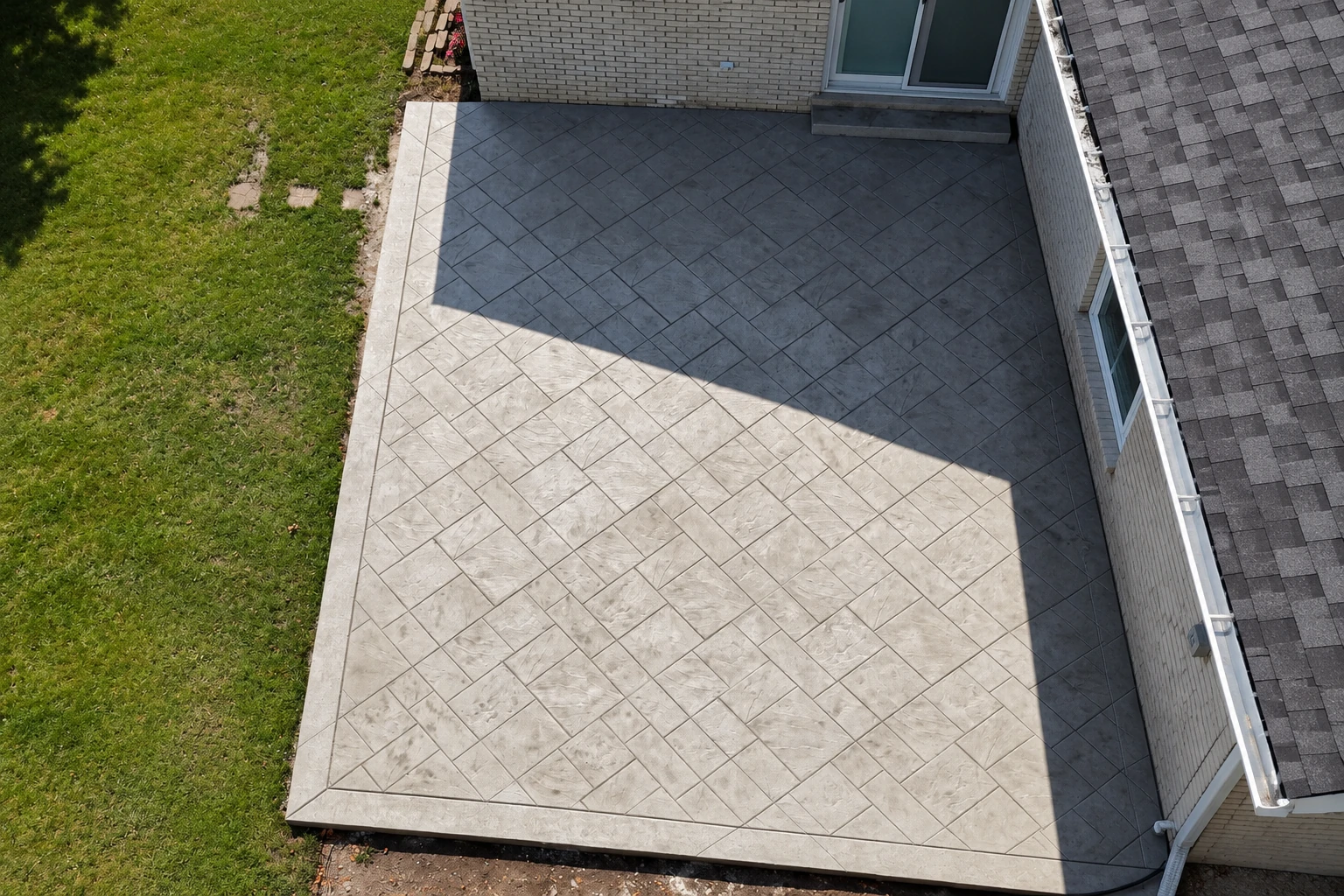
Stamped concrete gets a stone or brick pattern pressed in while it's wet. It pays off on a patio you look at daily, less on a side path.
Learn more about Stamped concrete servicesConcrete sidewalk building
Walks to the front door or around the side of the house, poured where an old one has heaved, cracked or turned into a tripping hazard.
Learn more about Concrete sidewalk buildingGarage floor concrete
If your garage floor is pitted, dusty or cracked across, we break it out and pour new, with rebar, steel rods that keep cracks from spreading.
Learn more about Garage floor concreteDecorative concrete
Color, exposed stone, stamped borders and other finishes for spots where plain gray would look out of place. I'll tell you where the upgrade isn't worth paying for.
Learn more about Decorative concreteConcrete retaining walls
Poured walls that hold back soil where a yard steps down or a slope keeps creeping onto a patio. The footing and drainage behind it matter most.
Learn more about Concrete retaining wallsConcrete floor installation
Interior slabs for basements, shops and additions, poured level and finished smooth enough for flooring, or left bare if that's how you'll use it.
Learn more about Concrete floor installationConcrete pool decks
Around a pool, the deck needs a surface that isn't slick when wet and slopes water away from the edge. We pour new decks and replace cracked ones.
Learn more about Concrete pool decksConcrete steps construction
Front and back steps poured with every step the same height, for when old ones have pulled away from the house, crumbled at the edges or started to rock.
Learn more about Concrete steps constructionSlab foundation building
Slab foundations for garages, shops and additions, where floor and foundation are one pour. The subgrade, the ground under it, decides how it holds up.
Learn more about Slab foundation buildingFoundation installation
Footings and walls for new homes, additions and outbuildings, poured for builders and homeowners who need it set right before anything goes on top.
Learn more about Foundation installationConcrete parking lot building
For a church, shop or rental property, we pour lots thick enough for the traffic they'll see, with slope and joints planned before the pour.
Learn more about Concrete parking lot buildingConcrete footings
Footings are the concrete pads or strips that carry a wall, deck post or addition. If one's undersized or sitting on loose fill, everything above it moves.
Learn more about Concrete footingsFoundation raising
Where part of a slab or foundation has dropped, we find out why it moved before lifting it, since a lift that skips the cause rarely lasts.
Learn more about Foundation raisingConcrete cutting
Saw cutting for a new doorway, a utility trench or a cracked section that needs to come out clean without breaking up the slab around it.
Learn more about Concrete cutting
When an old slab needs more than a patch
A hairline crack in a slab that's still level and still drains away from the house can usually be cleaned out and sealed. That's a repair. If there's one crack and nothing has moved, I'll tell you to patch it or leave it rather than pay for new concrete.
When pieces have sunk, water pools against the foundation, or cracks keep widening, the trouble is under the slab and a patch won't hold. That's when we talk about tearing it out and pouring a new driveway or patio, or about foundation raising if the house itself has dropped.
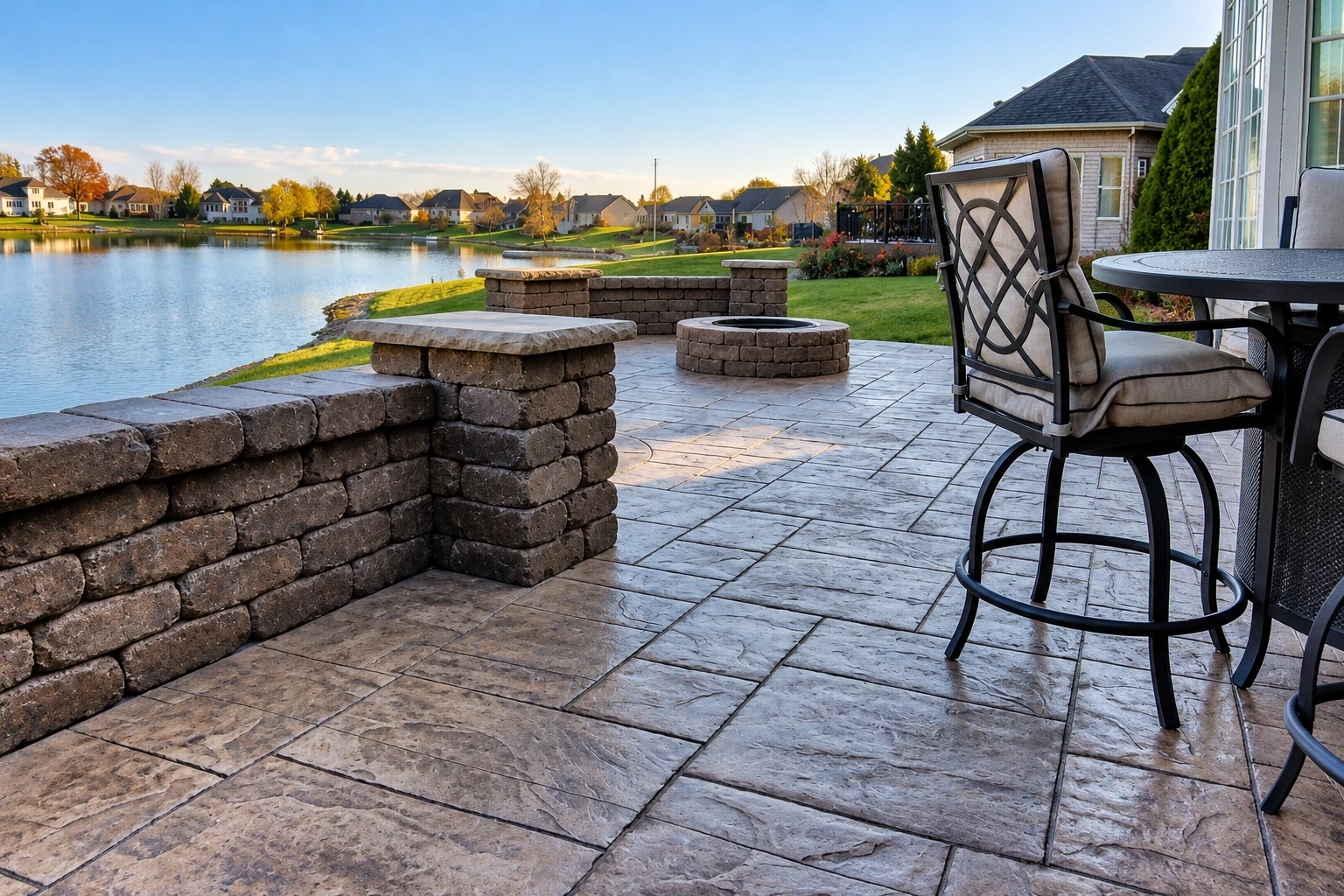
The driveways, patios and yards we see around Aurora
Some calls are for a front walk and steps, some for a backyard patio or a garage floor, and some come from builders who need footings or a slab for an addition. The size changes, but where the job sits on the lot, and where water runs across it, shapes every one.
Most calls start with concrete that's sinking, cracked or holding water. Where that's happened, the cause is usually underneath, a base that was raked level instead of dug out and packed, so the slab sank as the dirt did, or a slab that tips water toward the house.
When a budget gets tight, people want to cut the base and keep the fancy finish, because nobody sees the base after day one. I'd do it the other way. A plain broom finish, the rough texture that keeps feet and tires from slipping, over a solid base outlasts a stamped pattern over loose dirt.
What to have ready before your Aurora estimate
Where the water runs
Next time it rains, watch where water runs and where it pools, and take a photo if you can. That tells me how to slope the new slab so it drains away from your house instead of toward it.
What it has to carry
Tell us if it's for foot traffic, a car, a heavy truck or a trailer, and what might park on it later. That decides how thick we pour it and whether it needs rebar inside.
Sprinkler lines and access
Know where your sprinkler lines run and how a truck can reach the spot, whether through a gate, across the lawn or down a side yard. Lines get moved before we dig, and the route changes how we get concrete in.
Questions Aurora homeowners ask about concrete
Will my new concrete driveway crack like the old one did?
It shouldn't crack the same way, since wide cracks usually start with a base that settled, and we dig out and pack ours. Most slabs still crack a little, so we cut control joints, grooves that give a crack a straight line to follow, and on hot days we pour early so the top doesn't come out weak.
How long until I can drive on a new concrete driveway?
Foot traffic comes first and cars come much later, because concrete keeps hardening for weeks and a car puts far more weight on it than a person does. Cool weather slows the cure, so before the pour we tell you when it's safe to walk on and when to bring the car back.
Do I need a permit to pour a shed slab in Aurora?
The city's building code exempts a one-story detached residential storage shed up to 120 square feet from a permit, as long as it stores no vehicles. That exemption is written for the shed itself, so before we pour the slab under it, I check with the city for your address and get a permit if one's needed.
Which building codes does Aurora use for footings and foundations?
Aurora uses the International Residential Code for houses and the International Building Code, both with the city's own local amendments. Footings and foundations are where those rules matter most, so we pour them to the code the city applies to your project.
Where do I find contractor licensing information in Aurora?
The city's permitting page says contractor licensing information comes from its Building Division, so that's the place to start when you're comparing contractors. We're fully licensed and insured, and I'm glad to answer questions about it when I come out.
Tell us about your Aurora concrete job
Tell us what needs pouring or replacing, by form or phone. We reply within one business day, then I come out and write you a free, no-obligation estimate.
(720) 500-8526Mon–Sun: 6 AM–11 PM