Concrete retaining walls in Aurora CO - a wall that holds back your slope
Soil sliding toward the patio or an old wall starting to lean? We pour a concrete wall with a drain and clean fill behind it.
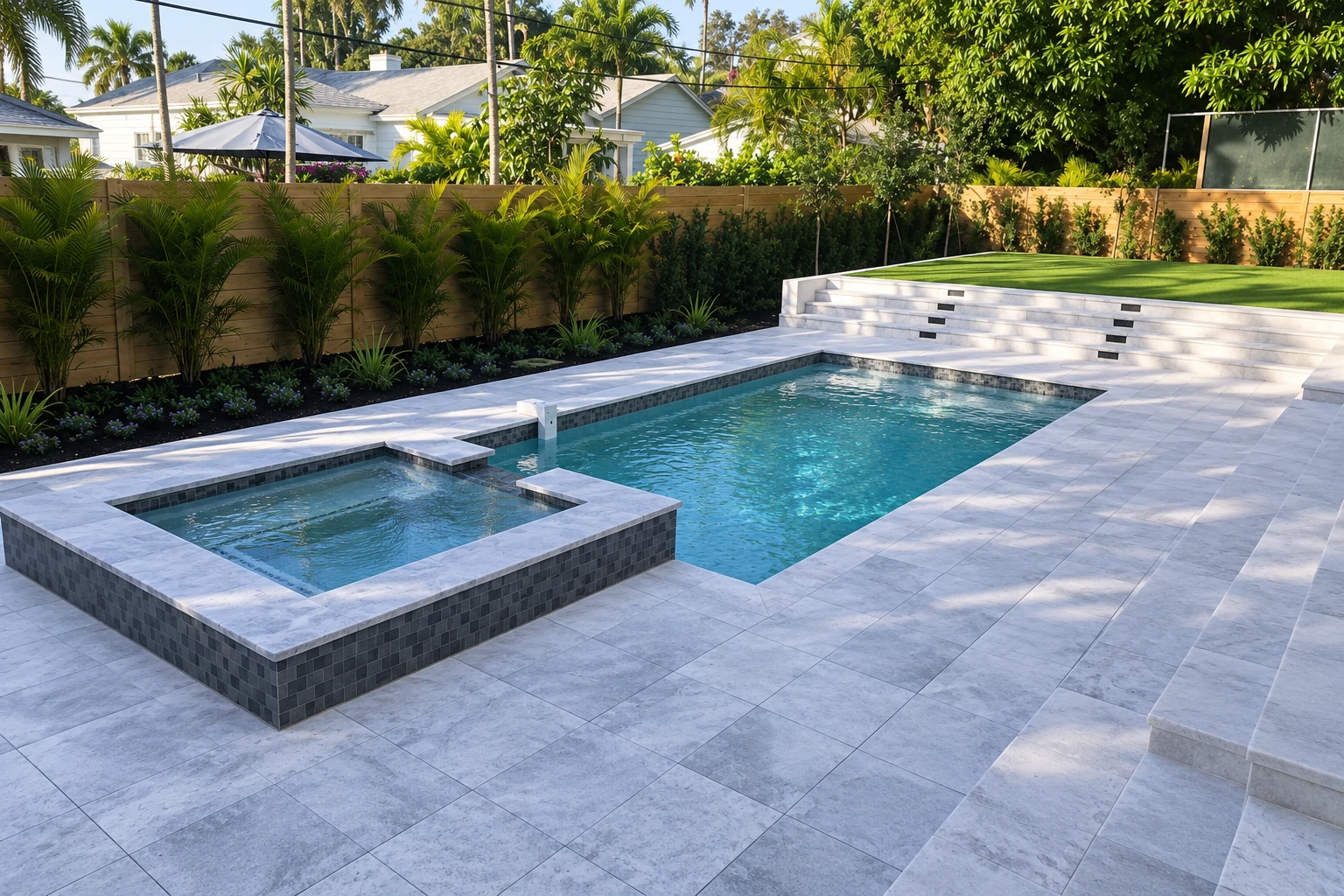
A concrete retaining wall holds the slope back
A concrete retaining wall holds back soil where your yard changes height, so the slope stays put instead of sliding onto the lawn, the driveway or the side of the house. The wall holds the grade. The flat ground it creates is usually its own job, like a concrete pool deck or a shop slab with a concrete floor.
We form and pour the wall in place over a footing, the wide concrete base it stands on, with steel bars called rebar inside to take the push of the dirt. Behind it go a drain pipe, drain rock and clean fill to carry water away, and that hidden part decides how long the wall keeps standing.
Price moves with the wall's height and length, how much dirt comes out, whether an old wall has to go first and how easy the spot is to reach. Timing turns on any permit review and on letting the concrete gain strength before we backfill. My written estimate lays out both for your yard, with what's included and what isn't.
Problems a concrete retaining wall can solve
A bank that keeps sliding
Where a slope sheds dirt onto the lawn, the walk or the driveway every time it rains, a wall holds that soil where it belongs. It also ends the job of mowing a bank you can barely stand on.
Room for a level yard
Cutting into a slope and holding it back gives you flat ground for a patio, a play area or a pool deck. On a steep lot, a wall can turn a bank you never use into yard you actually do.
An old wall that's giving out
Timber, block or concrete walls that lean, bulge or crack can be torn out and replaced with a poured wall built to drain. If yours is already leaning, I'll tell you plainly whether it's worth saving before we price anything.
Is a retaining wall the right fix?
A wall makes sense when a slope is too steep to mow or plant, when it's already moving, or when you want level ground cut into it. If the bank only drops a little and holds on its own, regrading and planting can be the cheaper answer, and I'll say so.
If the trouble is a house or garage that has settled or cracked, that's foundation raising, not a wall. And if what you mostly need is a safe way up the hill, concrete steps can go in beside the wall or on their own.
What to settle before we start digging
Where the sizes come from
Height alone doesn't tell anyone how deep the footing goes or how much steel the wall needs, so ask every bidder where those sizes come from. If the budget's tight, skip the decorative face before you cut the drain or the fill.
What will sit near the top
If you might park, add a driveway or build a shed near the top of the wall someday, tell us before the wall is designed. That extra weight changes how the wall has to be built, and planning for it now usually costs less than fixing it later.
Getting to the spot
We need room to bring a small excavator and a concrete truck or pump to the wall, and somewhere for the dug-out dirt to go. Tell us about fences, sprinklers and anything buried along the line, so the estimate covers what has to move.
Building retaining walls that last in Aurora
The City of Aurora issues permits for structures once the plans have cleared review by its departments. We check with the city for your address, and if your wall needs a permit, we get it before we dig. The city also requires contractors to be licensed for this work. We're fully licensed and insured, and the city's contractor licensing office answers license questions at 303.739.7420.
The city rates the risk of weathering damage here as severe, and Colorado clay swells when dry ground gets wet, so walls around Aurora get pushed by frost and wet soil. That's why we put as much into the drain and fill as into the concrete, since trapped water is what shoves walls over. We build the same way in Centennial and Parker.
Questions we hear about retaining walls
How much does a concrete retaining wall cost in Aurora?
An installed poured concrete retaining wall in the Denver metro area usually costs about $25 to $45 per square foot, according to one regional cost report. That's the going rate around here, not our quote. Your written estimate gives you the number for your wall.
Do I need a permit to build a retaining wall in Aurora?
Some walls do, and the city decides, as we covered in the Aurora section above. We sort it out for your address before we start, so any plan review is already part of the schedule we give you.
Will fixing the drainage save my leaning retaining wall?
Usually not, because a wall that has leaned or cracked has already moved, and better drainage won't push it back. One drainage guide says a wall like that likely needs rebuilding from the base, so it's smart to budget for that possibility.
What should go behind a concrete retaining wall?
Drain rock, filter fabric to keep dirt out of the rock, and a perforated drain pipe with outlets that can be cleaned out. Clay or topsoil is the wrong fill because clay holds water and swells, pressing harder on the wall than gravel does. Ask any bidder what fill they're putting back.
Will a new concrete retaining wall crack like my old one?
A poured wall can show thin hairline cracks as it cures and hardens, and those usually aren't a problem. Wide cracks and leaning mostly come from water or the wrong fill pushing from behind, so we let the wall gain strength before packing fill against it in thin layers.
How do I take care of a retaining wall after heavy rain?
Check that water is coming out of the drain pipe or the weep holes, the small openings near the bottom, and clear leaves, mulch and dirt off the base. Keep downspouts pointed away from the wall, and call us if you see new staining, cracks, leaning or soft ground.
Tell us about your retaining wall
Send photos of your slope or old wall with a rough length and height. We reply within one business day, and I come out for a free, no-obligation estimate.
(720) 500-8526Mon–Sun: 6 AM–11 PM