Concrete floor installation in Aurora CO - a slab built for the flooring you plan
Old floor cracked, heaved or still bare dirt? We pour a new slab that suits the ground under it and the flooring over it.
A new concrete floor, from the ground up
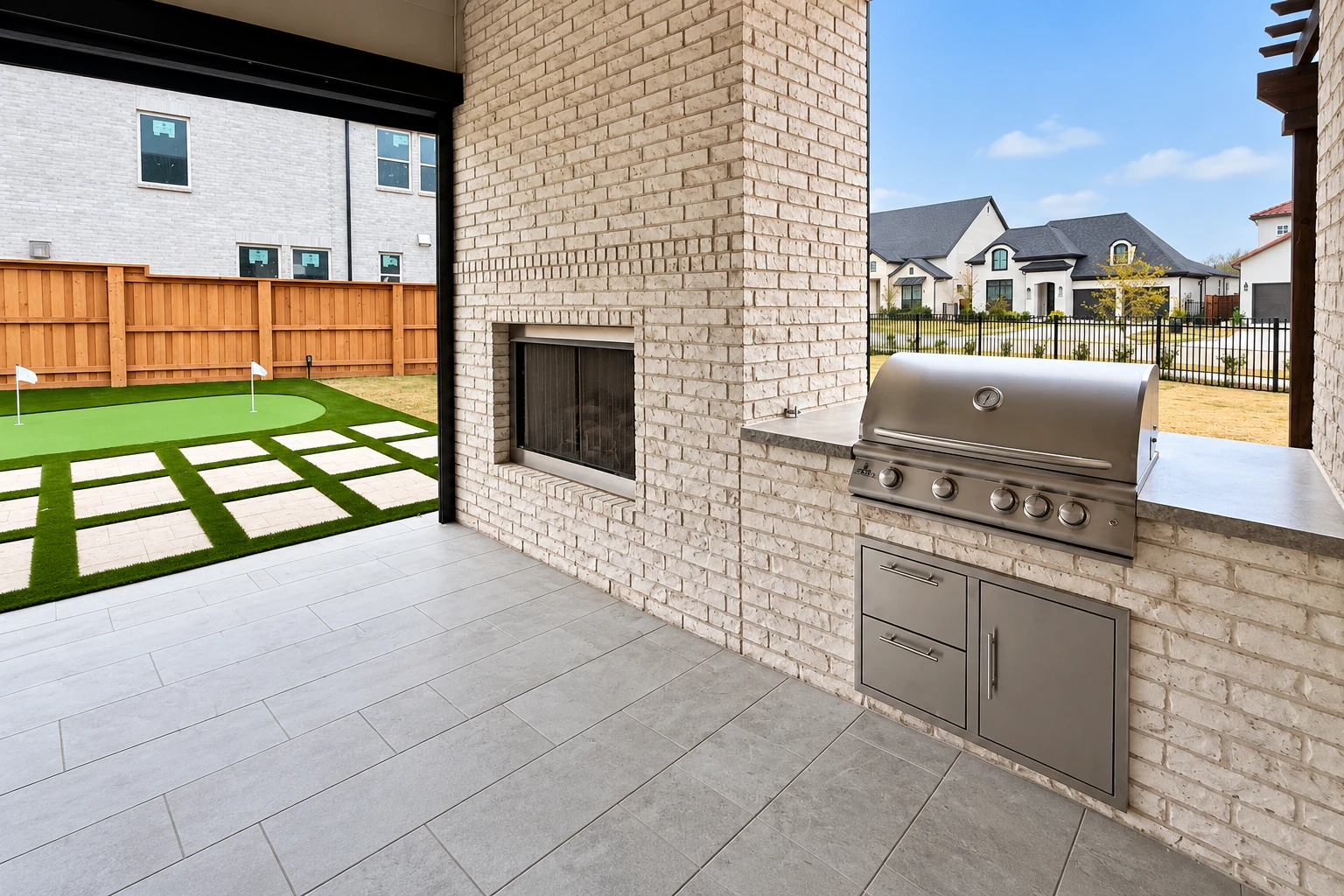
Concrete floor installation is pouring a new slab for a garage, a basement, a shop or another room under a roof. The slab can be the finished floor itself, or it can be the base for tile, wood, vinyl or carpet laid on top. We do this work for homeowners and property owners across Aurora.
It's close kin to our outdoor flatwork, the flat slabs like driveways, patios and walks, but a floor runs into different trouble. Outside, the weather hits concrete from above. Inside, the trouble usually comes from below, in the ground the slab sits on and the moisture working up through it.
The price moves with the size of the room, the slab's thickness, whether it's reinforced and how much work the base needs. The schedule turns on the weather at pour time and the wait before the floor can take traffic or flooring. Your own numbers come in the written estimate, with what's included and what isn't.
What concrete floor installation can fix in your home
A cracked or heaved floor
When an old slab has cracked, lifted or broken into pieces, patching it usually just buys time. We break it out, deal with what's under it and pour a new floor, so the problem underneath gets fixed instead of covered over.
A room with no real floor
Some basements, sheds, shops and additions have dirt, gravel or a thin old skim of concrete where a slab should be. A proper poured floor gives you a hard, flat surface you can sweep, park on or finish into a real room.
A solid base for new flooring
Tile, wood, vinyl and carpet all need something flat and solid under them. A slab built with that flooring in mind gives your installer a good surface to work on, and it lowers the odds of the flooring lifting or failing later.
New floor, foundation or outdoor slab?
If the slab goes inside walls that are already standing, it's floor installation. If the slab also has to carry the walls of a new building or addition, that's slab foundation building, because it has to be designed as the foundation and not just the floor.
If your floor dropped because the house itself is settling, a new slab won't fix that. Look at foundation raising first, then pour once the structure is steady. Not sure which one you've got? I'll tell you what I see when I come out.
Outdoor concrete is its own job, because sun, snow and runoff hit it from above. For the slab around a pool, see concrete pool decks, and for the way up to your door, see concrete steps construction.
What to settle before we pour your floor
What goes on top
I'll ask what flooring you plan before anything else, because it changes what goes under the slab and how smooth we finish the top. Bare concrete, a coating and glue-down tile each want something a little different.
The base you can't see
The subgrade, what the slab sits on, is the first thing people want to trim from a budget. I'd trim the finish before I'd trim the base, because a nice surface over bad prep cracks and settles right along with the dirt under it.
Where the cracks will go
Some cracking is normal, and I'll say so up front. We cut control joints, shallow grooves that give the slab a straight line to crack along, and we'll plan them with you so they don't land somewhere awkward under tile.
Concrete floors on Aurora ground
The City of Aurora says contractors need the right license to build, alter, repair or add to any building or structure in the city, and we're fully licensed and insured. For permits, we check with the city or county office for your address, since Aurora spans three counties, and if your floor needs one we get it before work starts.
Across Colorado, cracked and heaved garage and basement floors are a common sign of swelling clay, and Aurora's code rates the area for severe weathering, so a floor here has to allow for movement. Tell us what your old floor has done, and we'll plan the new one around it in Aurora, Centennial or Parker.
Questions about new concrete floors
How should a new concrete floor handle expansive clay soil in Colorado?
It should be built to allow for the ground moving, because the Colorado Geological Survey says floors built without that allowance are a very common source of damage where swelling clay is known. The survey also says only a professional soil engineer and engineering geologist should identify that clay, so ask whether one has looked at your site.
Does a new basement floor need a vapor barrier under it?
Yes, national concrete guidance calls for a vapor retarder, a sheet that slows moisture, laid directly under and touching every interior floor slab. Moisture coming up through concrete can make glues and coatings fail, which leaves flooring peeling, warped or discolored. That's why the flooring question comes first when I look at your job.
How much does a new concrete floor cost in the Aurora area?
A new concrete slab in the Denver area usually runs about $4 to $12 per square foot, not counting staining or stamping, and that's the area's going range, not our quote. Slabs with rebar, steel bars that hold the concrete together, cost more per square foot than plain pads. I'll put your number in writing after I see the room.
Will a new concrete floor in Aurora crack?
Probably a little, because national floor guidance says a completely crack-free floor isn't realistic and even good design and construction only reduce cracking. That's why bids are worth comparing on how each contractor builds the base, places joints and cures the slab. I'll walk you through what we do to keep cracks down.
Can you pour a concrete floor during an Aurora winter?
Yes, with extra protection, because national guidance says new concrete needs cold-weather care when the air is at 40°F or headed below it, and concrete that freezes early can be ruined or left weak for good. Whether that extra cost beats waiting for mild weather is your call, and I'll tell you which I'd pick.
How soon can I walk on a new concrete floor?
Usually within 48 hours. Concrete takes about a month, 28 to 30 days, to fully cure, which is the slow hardening that gives it strength, so to be safe you may want to wait a week before putting heavier loads on it.
Tell us about the concrete floor you need
Send the room, its size in square feet, your planned flooring and timing. We'll reply within one business day to set up a free on-site estimate, no obligation.
(720) 500-8526Mon–Sun: 6 AM–11 PM