Concrete patio construction in Aurora CO - a slab that drains and holds up to winter
Cracked, sinking or puddling patio out back? We build a new one on a packed base, with the joints and slope planned before the pour.
What goes into a new concrete patio
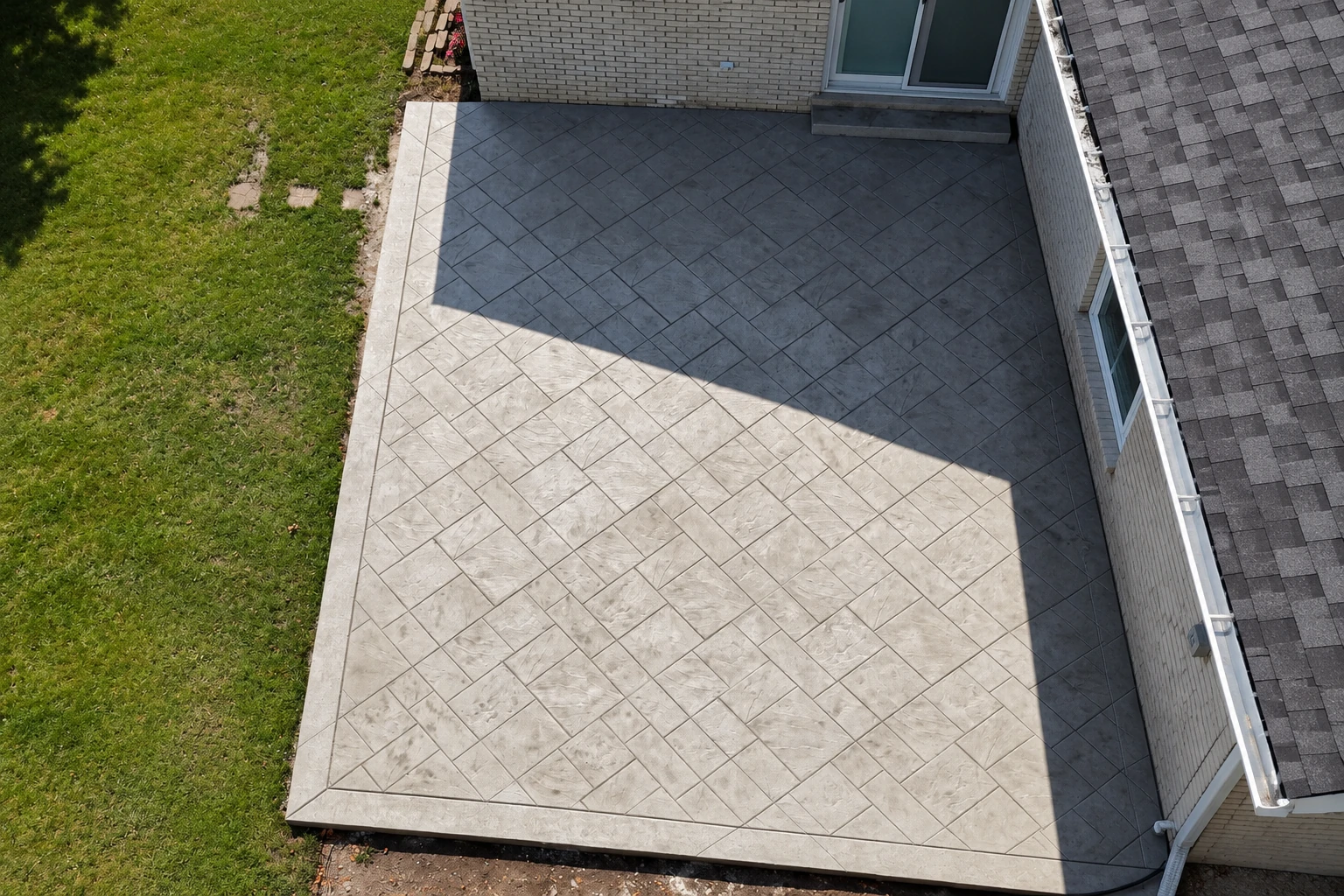
Our concrete patio construction in Aurora starts below ground. We dig out and pack the subgrade, the ground the slab sits on, set forms for the shape and slope, then place and finish the concrete and cut control joints, shallow lines that give the slab a planned place to crack instead of across the middle.
A patio is flatwork, the flat ground-level concrete that also covers walks and driveways, so it's built the same way, just shaped for a table, a grill and chairs off your back door. The job can include breaking out an old slab or pavers, tying in to steps or a walk you already have, and the surface you pick.
The price moves with the size, whether there's old concrete to break out and haul off, how hard the backyard is to reach, and the finish. The schedule turns on the weather and on curing, the days new concrete needs to gain strength before it takes weight. I write the estimate on site, and you get it in writing with what's included and what isn't.
What a new concrete patio can fix
An old slab that sank or broke up
When a patio has dropped, split into pieces or tipped toward the house, patching rarely lasts because the trouble is usually the dirt underneath. We break it out, haul it off, rebuild the base and pour a new slab on ground that's been dug out and packed.
Water that sits or runs the wrong way
Puddles that stand on the patio, or a slab that sends rain back at your foundation, come down to the slope. Starting over lets us set the fall so water heads out into the yard and away from the house.
A yard with no good place to sit
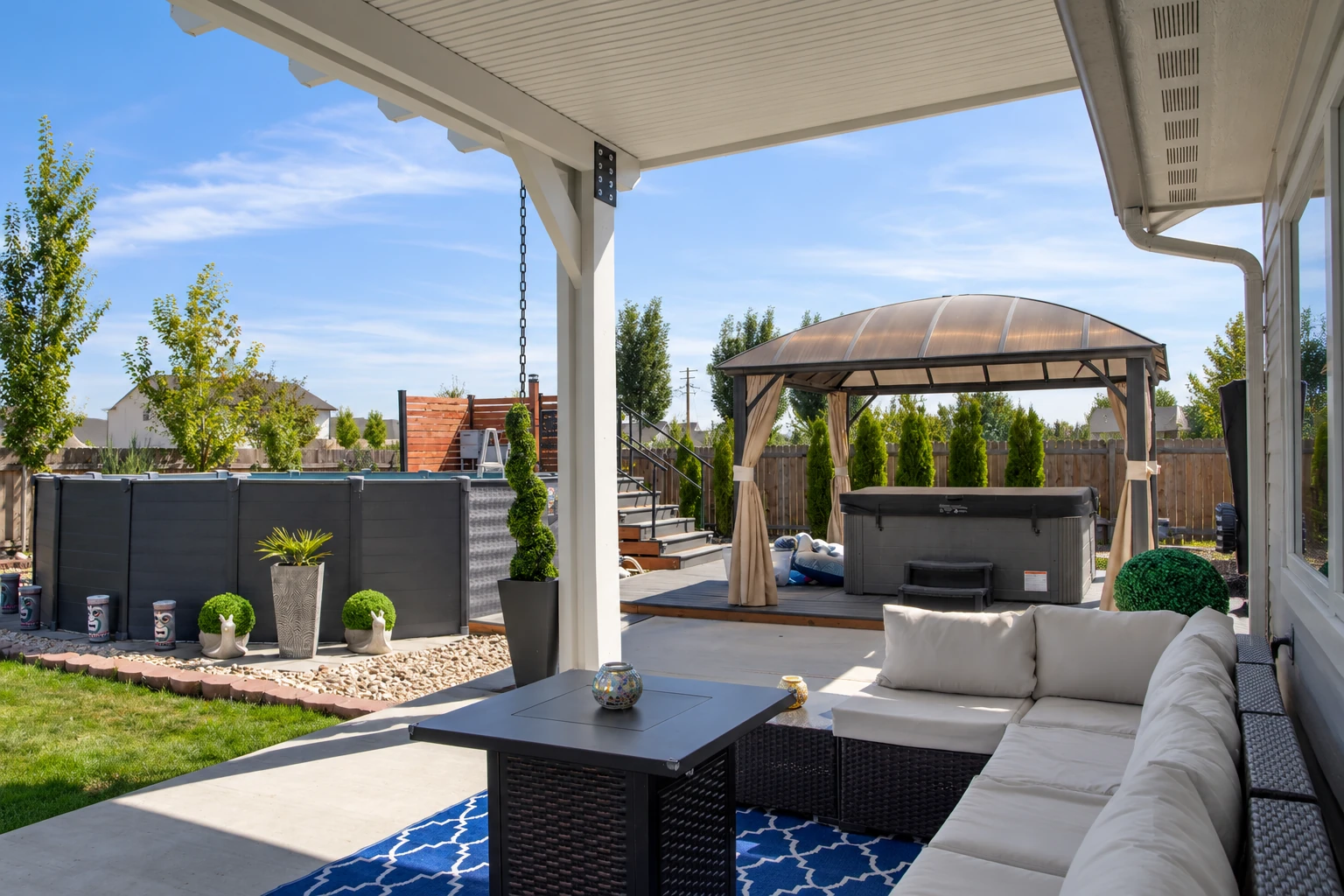
Bare dirt, patchy grass or pavers that keep shifting can become a flat, solid spot for a table and grill right off the back door. We size it to how you'll actually use it, with room to pull a chair out.
Plain patio, stamped patio or a new walk?
Most patios we pour get a broom finish, a light texture dragged across the top so it isn't slick when it's wet. If you want color or a stone or brick look, that's stamped concrete, which costs more and is worth it when the look matters to you.
If what you really need is a path from the driveway to the back gate, that's concrete sidewalk work. We can pour it along with the patio so the two meet cleanly instead of being patched together later.
When the budget's tight, I'll tell you to skip the upgrade on top before you skimp on the base, because nobody sees the base on day one and it's the first thing a low bid cuts. A pretty finish over loose dirt settles and cracks right along with it.
What we settle with you before the pour
Joints and slope come first
We lay out the joints and the slope before anything else, because joints are how you control where a patio cracks and standing water is what eats the surface. I'll walk you through where each line falls so it lands somewhere that makes sense, like off a door corner.
Access and what's in the way
Tell us how a truck or our wheelbarrows can reach the back, and where sprinkler lines, downspouts and fences sit. A tight side yard or a line in the dig changes how we bring the concrete in and how we set the forms.
Pour day and getting it back
We pick the pour time around the weather and start early in summer, since a slab that bakes in midday heat can end up with a weak, dusty top. Before we leave, we'll tell you when you can walk on it and when the furniture can go back.
Pouring patios for Aurora's winters and clay
Aurora's city code rates the risk of weather damage here as severe, and the state's geological survey says most homes and roads in Colorado are built where the clay can swell. The survey also points to water ponding near a foundation, so when I come out, show me where your downspouts empty and where water stands after a storm.
The City of Aurora says contractors working in the city need the right license for the work, and we're fully licensed and insured. We check with the city or county office for your address and get any permit the job needs before we start. We're based in Aurora and also work in Centennial, Parker and the cities around them.
Questions Aurora homeowners ask about patios
How much does a concrete patio cost near Aurora?
A Denver cost guide puts a concrete patio at about $5 to $12 a square foot, with materials and labor included. Where yours lands depends on the size, any tear-out, access and the finish, and the written estimate I give you on site spells out your number.
Will my new concrete patio crack like the old one did?
Some cracking can't be prevented in any concrete, but well-planned joints control where it shows up and keep it small. Control joints give it planned lines to crack along, and isolation joints, the gaps where the patio meets your walk, garage slab or steps, let each piece move on its own. An old patio that cracked everywhere usually had skipped joints or a base that settled.
What kind of concrete holds up to freezing and thawing in Colorado?
Concrete with entrained air, tiny bubbles spread evenly through the mix, holds up better because those bubbles give freezing water room and relieve the pressure. It's worth asking about on every bid you compare. One admixture maker's guide adds that a broom or float finish keeps those bubbles near the surface, where a hard steel-troweled shine works them out.
Which way should a concrete patio slope for drainage?
It should slope so water runs off the slab and away from your house. A concrete trade group in Ohio advises this because concrete that stays soaked and then freezes and thaws is prone to damage on its surface. We settle the slope with you before the forms go in.
Can you pour a concrete patio in cold weather in Aurora?
Yes, as long as the ground is ready. A Michigan concrete group's cold-weather guide says the ground must be unfrozen and at least 40°F before concrete goes down, so a late-season date depends on the ground, not the calendar. If it isn't ready, I'd rather move your date than pour on frozen dirt.
How do I take care of a new concrete patio its first winter?
Keep deicing salt off it for the first year. The same Ohio group says that matters most when the concrete went in after September, and suggests sand or kitty litter for traction instead. It also recommends cleaning and reapplying a penetrating sealer every 3 to 5 years, following the sealer maker's instructions.
Tell us about the concrete patio you want
Send the rough size in square feet, a few photos and your timing, and we'll reply within one business day to set up a free on-site estimate, no obligation.
(720) 500-8526Mon–Sun: 6 AM–11 PM